Showing posts with label Victorian. Show all posts

Friday, June 27, 2025

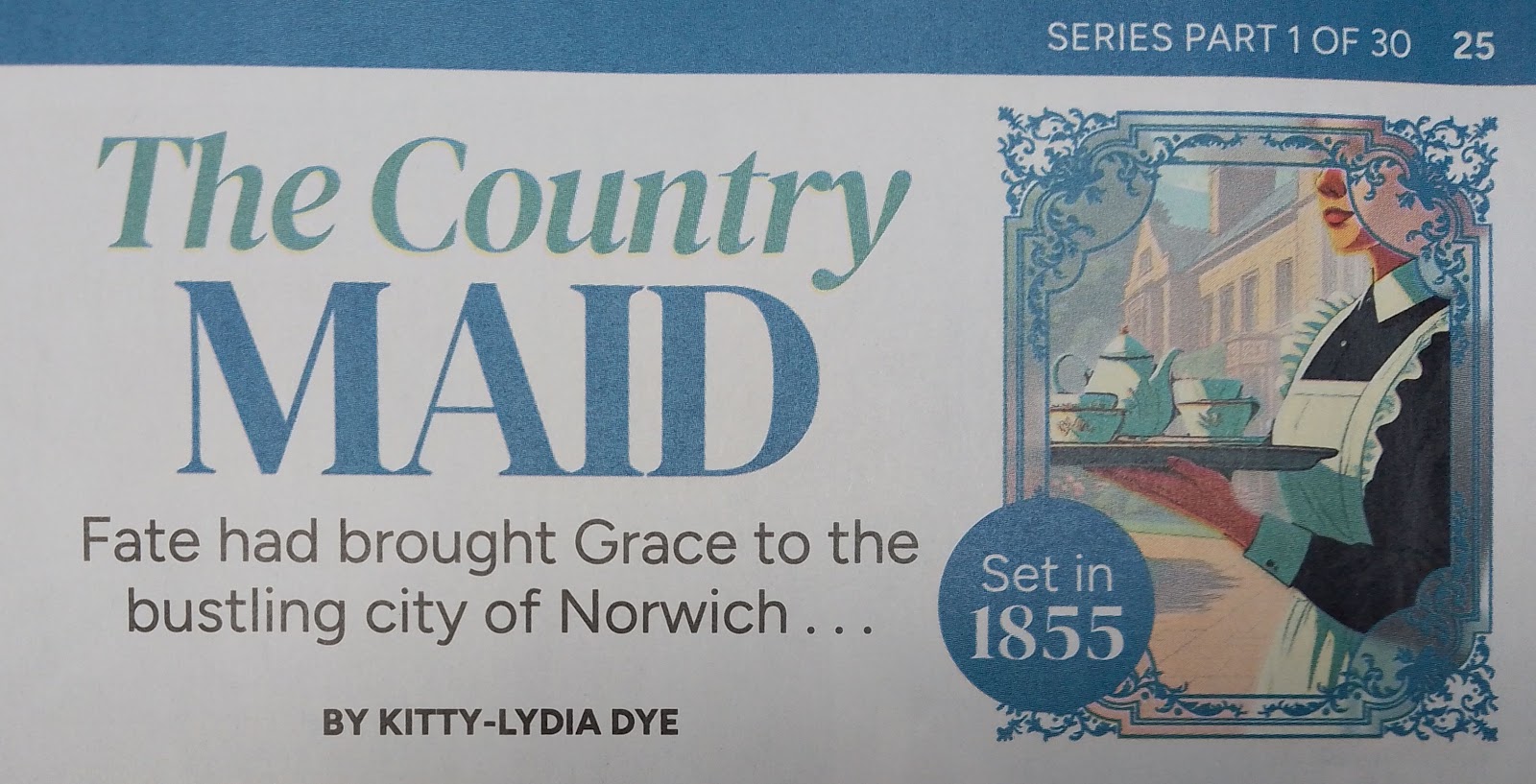
Part 4 The People's Friend: The Country Maid Companion Blog


Grace kicked over the corner of a rug, pursing her lips as a coin was revealed. That was five now.

Some might think her lucky if they did not know the trick.

𑽇

It’s another day working in Marchant manor for Grace Beckett, but will today bring something new, exciting… and vibrant?


Thursday, June 19, 2025

Part 3 The People's Friend: The Country Maid Companion Blog


With a house so large, it was no surprise a small mountain of washing formed.

𑽇 

In Part 2 of The Country Maid, Grace realises her employer expects high, perhaps impossible standards. The maid throws herself into her tasks and gains a friend in fellow maid Eliza, but can they prove to the rest of the household that they’re capable?

Laundry work during Victorian times could take the entire day for an ordinary family. With somewhere that also housed staff, the work was tripled.

The dirty clothes were left to soak overnight. Come morning, the lucky maid tasked with laundry had to get rid of any stains, either scrubbing them over a washboard or using a washing dolly/posser, which was a stick about waist high with little feet and handles. The dolly was placed in the tub’s centre and turned to agitate the clothes in much the same way a washing machine does nowadays. It was hot, sweaty work and it could feel as if there was no air in that muggy laundry room.

Thursday, June 5, 2025

The People's Friend: The Country Maid Companion Blog Part 1


“They’re a different sort of folk in the city. Don’t let no-one think they can trick you because you don’t know their ways.”

𑽇 

Earlier this month, The People’s Friend published an interview with me online about my upcoming Victorian Upstairs, Downstairs series The Country Maid. Now, with the first part in this week’s magazine (available online and at most stores) I thought I would post a companion blog. This will showcase my writing process and inspiration alongside an in depth look at story locations and historical research. This will be posted a few days after each part comes out, so you’ll need to read that first before coming here :D

Thursday, August 3, 2023

Sabotage At The Big Top - Part One - The People's Friend


Part one of my new serial starts in The People's Friend magazine! A Victorian family drama where a travelling circus struggles to reach their final destination at Norwich when someone begins sabotaging the acts.

Part two will be released next week :)

Sunday, March 26, 2023

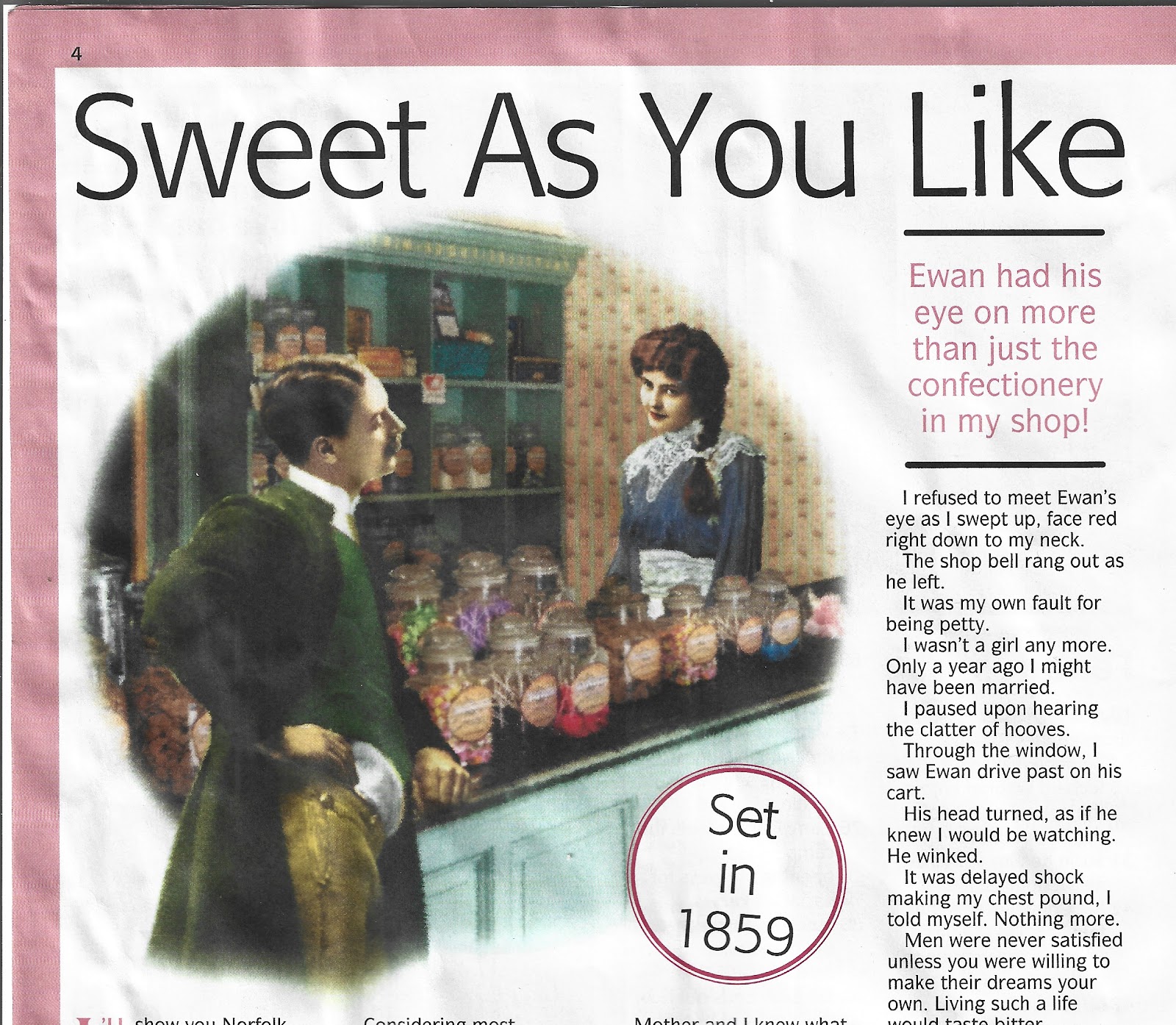
Sweet As You Like - Victorian Sweet Shop Romance - The People's Friend Special


Illustration by Mandy Dixon

Out this month in The People's Friend Special is my latest short story. This one is set in Norwich and is actually a prequel to a past story, Carried By The Wind, but you don't need to have read that one to enjoy Sweet As You Like! :)

Sunday, March 5, 2023

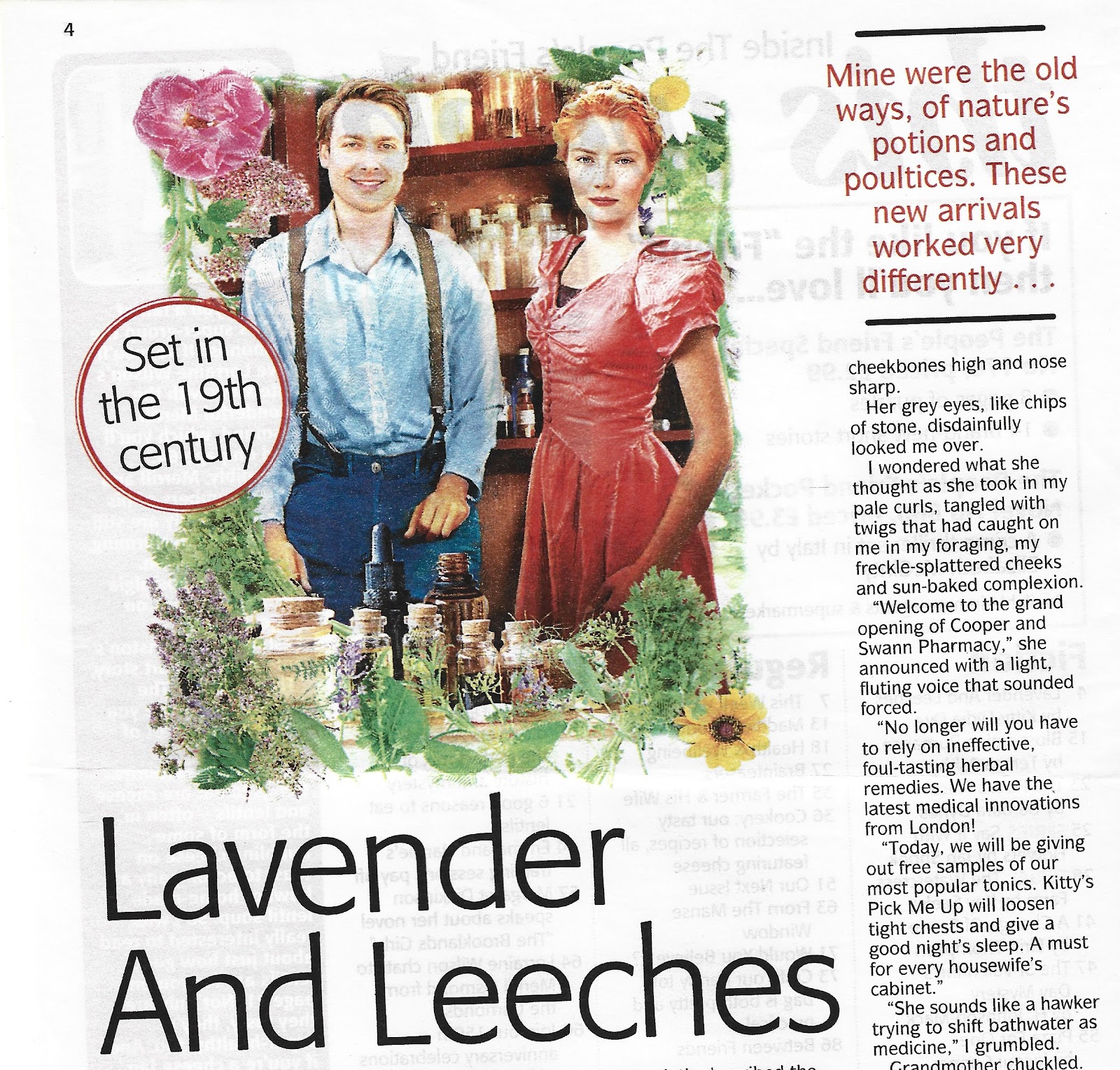
Lavender and Leeches - What Did A Victorian Pharmacy Offer?

As a lookback on my past works, this blog post is going to focus on my short story Lavender and Leeches. This was previously published in The People’s Friend magazine back in 2019. 

Alongside it was this lovely illustration by Jim Dewar.

It was my sixth story with the magazine and was heavily inspired by watching reruns of Victorian Pharmacy, a BBC documentary series starring Ruth Goodman where historians recreated working in a 19th century pharmacy. 

Other influences came from the pharmacy display at the Bridewell Museum in Norwich, which, while based on a 20th century pharmacy, certainly has a varied and interesting selection of old medicines. There’s even a carboy 😊

Wednesday, April 13, 2022

The Wherryman's Daughter - Part One


The Wherryman’s Daughter

Part One


Charity spied her father from where she knelt amongst the reeds and rushes. Owen stood at the tiller of their wherry, the Marsh Lady.

The moon was a smooth pebble throbbing with light but, like waves slowly dragging across, night mists covered it. The painted white snout on the wherry, used to help other boats spot her in the gloom, had been covered with ropes.

Wavering, Charity dug her feet into the riverbank. Mud smeared over her skirt and legs, yet a bit of dirt was better than tipping into that dark, grasping water.

Her father could not sail the wherry alone. She should be there with him, helping guide the boat through the river bends.

He had not dared to ask for her help, though. Her father knew she would have disapproved of his reason, and demanded he give the goods back to whomever had got him into this wicked business.

At the stem of the wherry, there was the hunched figure of another man. She could not tell who he was, as his face was concealed by his downturned hat. He was too big and hulking to be her cousin Alf. Could he be the smuggler or just another one of his lackeys?

Oh, Father, she thought, gritting her teeth, why do you do this? Couldn’t he see he was the one taking all the risk, while some unknown person reaped the profits?

Charity was tempted to stand and call for him to take the wherry home. However, she knew he was too stubborn. If only her mother were still here, then she would have been able to get him to listen.

She crept further along. Rain still glistened on the grass. Damp reeds stuck to her cheek, tugging like a child desperate for attention. Annoyed, she scraped them away, shivering as the cold crept past her shawl.

A misstep, and the squelching splash of mud seemed to echo. Her lips snapped together as she held her breath, waiting for her father to cry her name.

The brim of the stranger’s hat twisted in her direction. Her pale blue eyes seemed to stand out even more as they widened. Breath spluttered out of her as her heart writhed, wanting her to run.

Do not call out, Charity prayed desperately in her head. I am nothing but a shadow, a trick of the mind.

Then a barley bird shot out from a bush nearby. The stranger and her father chuckled, though it was empty of humour.

Her father turned back to the tiller. They were just as nervous. The sound of the boat cleaving through the water and the groan of the oak body pierced the silence.

A bright leaf green flag at the very top of the mast fluttered and danced at the slightest of breezes. It curled around the little tin Marsh Lady vane: a woman with a hat of feathers and a long river weed dress.

The wind blew Charity’s way and her nose wrinkled. No matter how long she worked on the wherry, she would never be fond of the whiff of tar and herring oil that the sail had been dipped in.

The Marsh Lady slowed. This was it. She had an idea of what her father planned. Although they were far from the fields, there would be one man sowing the crops, as men down the Copper Rose Inn said as they laughed into their tankards.

Heaving and grunting, straining his already weak back, Owen lifted up a cask of something. Brandy, most likely. There was a rope attached and she knew a stone was tied at the end.

Last week, she had curiously watched him pick stones from the path back home from church. He even had such plans on a Sunday!

The cask was pushed overboard, and it made a deafening splashing sound. He stiffened, anxiously turning his head side to side. Was he checking that the customs and excise men weren’t about to leap out of the water?

After a while, he started up again. Charity quietly counted under her breath as each cask struck the water. One, two . . . thirteen!

None rose. They were weighted down and hidden until someone came to dredge up the booty and carry it down to Norwich.

The Marsh Lady continued on. Charity hurried home, scowling.

She had seen all she needed to prove her suspicions. Now, all she had to do was figure out how to get her father safely away from the smugglers.


****


“Have you seen anything strange these past few nights, Charity?” was the first thing she heard that morning, upon opening the front door.

Her fingers tightly clenched the door handle to try and contain the tremor in her hand.

Josiah Thiske, the local customs man, stood there with his hat in his hand. He was only five years older than her, twenty-nine, yet he had a sunken, craggy face. Sharp winds had whittled his skin from when he had hunted for smugglers along the coast.

He was smiling at her, revealing the crooked, chipped front tooth that looked like a fang. Apparently, it was caused by a Dutch smuggler who had struck him with his cosh. It gave him a hungry, wolfish look.

A shiver was scraping up Charity’s back. Was she the prey? Had she been watched and followed as well, as she had done to her father?

Monday, October 11, 2021

The Ghost in the Graveyard - The People's Friend Special


My latest short story is in this month's The People's Friend Special magazine. Ghosts, the Norfolk coast and the 1841 census, just in time for Halloween! :)


Thursday, July 22, 2021

Surprise at the Seaside - The People's Friend Summer Special - Runaway Bathing Machines

Illustration by Tracy Fennell

The horse bolted across the shoreline, dragging the bathing machine and Chastity. They thundered through the holiday-goers.


Brightly coloured beach huts are a common sight along the British seafront, but they weren’t always so static. Back in the 18th century, as can be seen throughout classic books, the latest health craze was ‘taking the waters’ – going to the spas in Bath – or a ‘change of air’. With poor sanitation and smog in crowded cities, a fresh sea breeze was often what doctors prescribed. Seaside holidays were gaining appeal.

The only problem was the need for propriety jarred with enjoying the beach. Men and women were banned from mixing and specific areas were cordoned off. Swimming costumes for men only became a rule in the 1860s. Women’s swimming costume weren’t very comfortable. These dresses were made of heavy flannel and would even have small weights attached to the skirt to stop the waves from lifting it up and exposing the lady’s – shock and horror! – covered legs.

Bathing machines were a way of allowing women and men the privacy of sea bathing without causing a scandal. Even Queen Victoria owned one.

These machines were huts on wheels, some a basic changing room while others were quite fancy with decorations and a looking glass. Horses would pull them to the shoreline. When the holidaymaker was ready, they opened the door and went down the little steps – more getting their feet wet than actually swimming. Dippers were also employed to plunge the swimmer in and out of the water for something more bracing.

I rather like the thought of a bathing machine to relax in, able to wheel myself wherever I fancied, but there could be some peril involved. I was surprised to discover deaths connected with bathing machines. In the Illustrated Police News dated 1871, a young woman died in Great Yarmouth after leaving her bathing machine. There was also something similar in Dieppe. Although it was after almost drowning in the sea rather than the actual machine, but that did not stop the newspaper titling the article Death in a Bathing Machine!

By 1901, separate swimming areas were no longer imposed. There was no need for modesty and so the bathing machines lost their appeal. Rather than being broken up and forgotten, most had their wheels removed and were turned into the beach huts we know today.

What are your memories of the beach and their huts? Would you have preferred the privacy of a bathing machine?

In my latest short story, Surprise at the Seaside, in The People’s Friend Summer Special, Lady Ashworth finds herself in peril when a clandestine meeting leads to her struggling with a runaway bathing machine.


Some research links from when I was writing the story :)

http://www.victoriana.com/library/Beach/FashionableBathingSuits.htm

https://blog.britishnewspaperarchive.co.uk/2019/08/20/death-in-a-bathing-machine-other-bathing-machine-headlines/

http://www.regrom.com/2019/03/22/regency-reader-questions-spas-and-bathing/

http://www.ourgreatyarmouth.org.uk/page_id__162.aspx?path=0p5p99p

https://www.visitnorfolk.co.uk/inspire/history-of-norfolk-seaside-holidays.aspx

https://www.bbc.co.uk/teach/school-radio/audio-stories-victorian-seaside/zfxjkmn


Friday, June 4, 2021

Tell It To The Bees - The People's Friend Special 209

The lives of bees and humans have been entwined as far back as the Egyptians. Bees were linked with royalty, appeared in hieroglyphs, and jars of honey were even included in a marriage contract. The Vikings viewed honey as a precious commodity when trading, especially as it was used for their much-loved mead, while the Greeks and Romans viewed bees as messengers from the Gods and Goddesses.

Wherever a hive is, humans are sure to benefit. Throughout the centuries honey has been used for art, medicine, food preserve, make-up, religious ceremonies, and we haven't even touched on it as a sweetener!

My short story, Tell It To The Bees, in issue 209 of The People’s Friend Special focuses on a mix of early and late Victorian beekeeping alongside the timelessness of bee folklore.

Illustration by Tracy Fennell

Various superstitions surround bees and their keepers. The most well-known is having to keep the hive abreast of family events. Be it a death, marriage or someone moving out, if you didn’t let the bees know it would be taken as an insult, causing them to fly off and never return. Certainly, something like an elopement would put them in a snit.

Covering the hive in mourning colours was the best way to tell them of a death, but there are also regional based rhymes which the new master could say. Newly married couples would also have to meet the bees and leave them a slice of wedding cake.

The origins of why the bees need such gossip is unknown, but it could be because our ancestors believed they had ties with the afterlife.

Other superstitions include:

  •  Good luck will touch a household if a bee flies inside, but they must fly back out of their own accord for the luck to remain.
  •  Bees are unable to harm a maiden. Also, a potential lover could be introduced to the hive, and if they get away without any stings they’ll remain faithful.
  •  A bee landing on your hand means money is heading your way.
  •  But if a swarm settled on a dying tree on someone’s property, death is coming instead.

To go alongside my story, I’m going to focus on Victorian beekeeping. Throughout housekeeping journals, honey is mentioned either as a sweetener or in recipes for delicious honey cakes. The wax was used for regular and religious candles, polish and moustache wax.

A beekeeping association was formed in 1874 (The British Beekeepers Association). The rise in popularity led to apiaries on estates, a yard of hives so the household could have their own homemade honey.

Protective equipment included a wide brimmed hat with a mesh veil and a blouse style top with ties, although there was a wicker mask outfit back in the 1500s which frankly looks terrifying.

At the time, skeps were still used by keepers to house bees. They were made of straw and looked like upside down baskets. When the honeycomb was ready to be harvested, rather than finding a new hive to drum the queen and her bees into, the skeps were pulled apart and the bees destroyed.

By the mid-19th century, Reverend Langstroth, had designed a box style wooden beehive similar to what we are familiar with now, making it easier and safer to collect honey from.

In the past, beekeeping methods have destroyed bees. Now keepers understand how precious bees are, not only as a provider of wax and honey but as a vital part of the natural environment.

However, bees are still under threat. Harmful chemicals in pesticides and the destruction of local green spaces have led to a reduction in the bee population.

There are many ways people can help, including signing petitions or writing to local politicians to champion environmental issues. But the most important thing is to plant bee friendly flowers, such as lavender, fox gloves, honeysuckle and primrose as well as putting up bee houses to give bees safe spaces while gathering pollen.