
Gorgeous illustration by Ged Fay for my Plough Monday inspired rural coming of age/romance mystery story. It's still available in the weekly The People's Friend magazine!
 |
| Gorgeous artwork is by Sailesh Thakrar |
In The Mermaid’s Gift, an old family story about a mermaid encounter brings romance and drama.
♡
“My grandfather, Josiah Young…” he began, coughing as he always did. I once heard Grandmother say to Mum that she always knew the old boy was lying when he coughed, but I didn’t believe that. “…once saw a mermaid.”
In this month's issue of The People's Friend Special is my short story On St Mark's Eve - a folklore romance with rivalry, ghosts and smuggling! Illustration is by Sailesh Thakrar :)

 |
| Illustration by Mandy Dixon |
With the release of another of my short stories in The People’s Friend magazine, A Light On The Horizon, I’ve decided this blog post will be about my writing process for historical fiction 😊 It’s an adventure romance set on the Norfolk coast with lighthouses, smugglers and a great big storm! Currently available in issue 236 of The People's Friend Special.
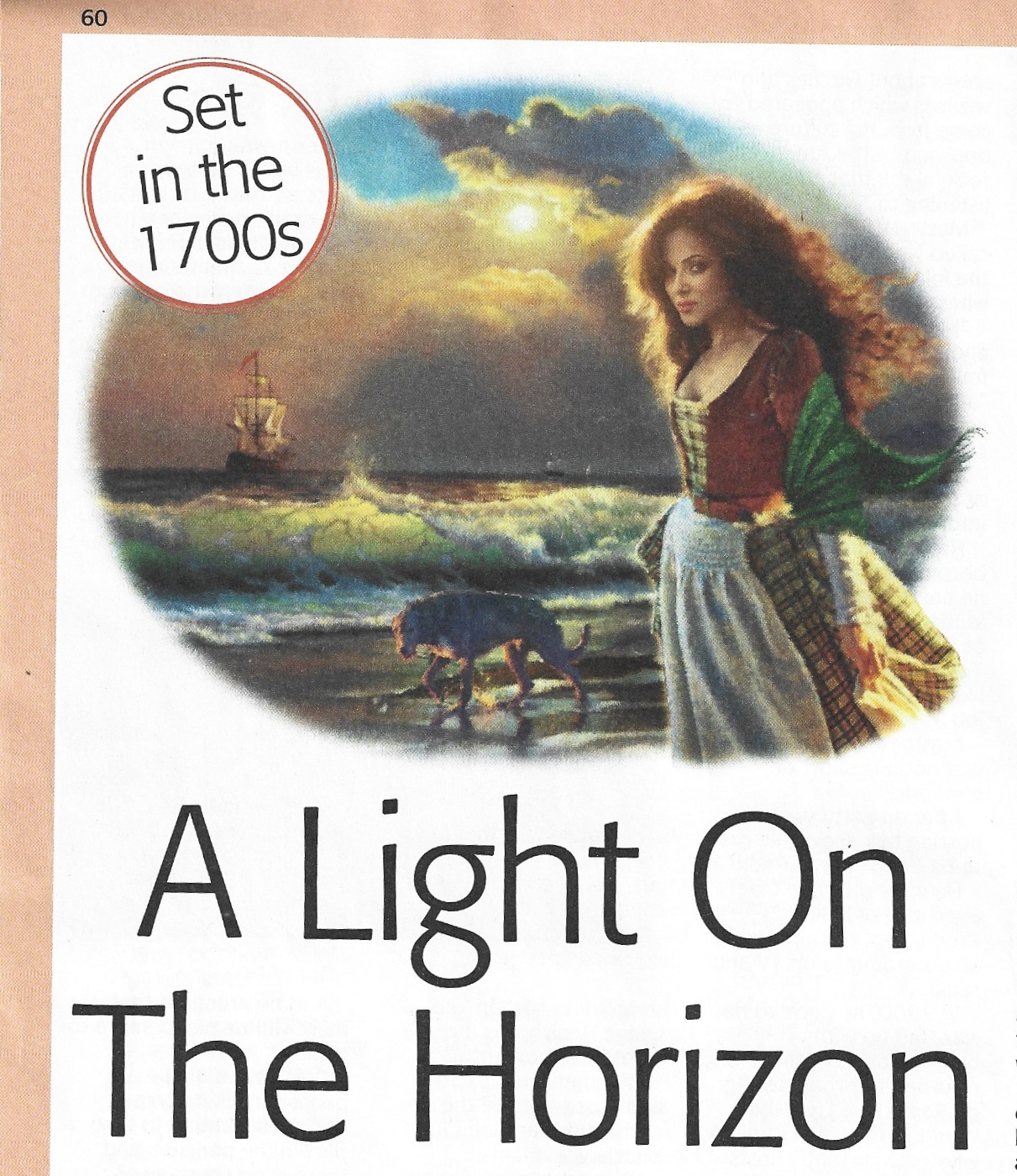 |
| Gorgeous illustration by Mandy Dixon |


 |
| Illustration by David Young |
The Wherryman’s Daughter
Part One
Charity spied her father from where she knelt amongst the
reeds and rushes. Owen stood at the tiller of their wherry, the Marsh Lady.
The moon was a smooth pebble
throbbing with light but, like waves slowly dragging across, night mists
covered it. The painted white snout on the wherry, used to help other boats
spot her in the gloom, had been covered with ropes.
Wavering, Charity dug her feet
into the riverbank. Mud smeared over her skirt and legs, yet a bit of dirt was
better than tipping into that dark, grasping water.
Her father could not sail the
wherry alone. She should be there with him, helping guide the boat through the
river bends.
He had not dared to ask for her
help, though. Her father knew she would have disapproved of his reason, and
demanded he give the goods back to whomever had got him into this wicked
business.
At the stem of the wherry, there
was the hunched figure of another man. She could not tell who he was, as his
face was concealed by his downturned hat. He was too big and hulking to be her
cousin Alf. Could he be the smuggler or just another one of his lackeys?
Oh, Father, she thought, gritting her teeth, why do you do this? Couldn’t he see he was the one taking all the
risk, while some unknown person reaped the profits?
Charity was tempted to stand and
call for him to take the wherry home. However, she knew he was too stubborn. If
only her mother were still here, then she would have been able to get him to
listen.
She crept further along. Rain
still glistened on the grass. Damp reeds stuck to her cheek, tugging like a
child desperate for attention. Annoyed, she scraped them away, shivering as the
cold crept past her shawl.
A misstep, and the squelching
splash of mud seemed to echo. Her lips snapped together as she held her breath,
waiting for her father to cry her name.
The brim of the stranger’s hat
twisted in her direction. Her pale blue eyes seemed to stand out even more as
they widened. Breath spluttered out of her as her heart writhed, wanting her to
run.
Do not call out, Charity prayed desperately in her head. I am nothing but a shadow, a trick of the
mind.
Then a barley bird shot out from
a bush nearby. The stranger and her father chuckled, though it was empty of
humour.
Her father turned back to the
tiller. They were just as nervous. The sound of the boat cleaving through the
water and the groan of the oak body pierced the silence.
A bright leaf green flag at the
very top of the mast fluttered and danced at the slightest of breezes. It
curled around the little tin Marsh Lady
vane: a woman with a hat of feathers and a long river weed dress.
The wind blew Charity’s way and
her nose wrinkled. No matter how long she worked on the wherry, she would never
be fond of the whiff of tar and herring oil that the sail had been dipped in.
The Marsh Lady slowed. This was it. She had an idea of what her father
planned. Although they were far from the fields, there would be one man sowing
the crops, as men down the Copper Rose Inn said as they laughed into their
tankards.
Heaving and grunting, straining
his already weak back, Owen lifted up a cask of something. Brandy, most likely.
There was a rope attached and she knew a stone was tied at the end.
Last week, she had curiously
watched him pick stones from the path back home from church. He even had such
plans on a Sunday!
The cask was pushed overboard,
and it made a deafening splashing sound. He stiffened, anxiously turning his
head side to side. Was he checking that the customs and excise men weren’t
about to leap out of the water?
After a while, he started up
again. Charity quietly counted under her breath as each cask struck the water.
One, two . . . thirteen!
None rose. They were weighted
down and hidden until someone came to dredge up the booty and carry it down to
Norwich.
The Marsh Lady continued on. Charity hurried home, scowling.
She had seen all she needed to
prove her suspicions. Now, all she had to do was figure out how to get her
father safely away from the smugglers.
****
“Have you seen anything strange these past few nights,
Charity?” was the first thing she heard that morning, upon opening the front
door.
Her fingers tightly clenched the
door handle to try and contain the tremor in her hand.
Josiah Thiske, the local customs
man, stood there with his hat in his hand. He was only five years older than
her, twenty-nine, yet he had a sunken, craggy face. Sharp winds had whittled
his skin from when he had hunted for smugglers along the coast.
He was smiling at her, revealing
the crooked, chipped front tooth that looked like a fang. Apparently, it was
caused by a Dutch smuggler who had struck him with his cosh. It gave him a
hungry, wolfish look.
A shiver was scraping up Charity’s back. Was she the prey? Had she been watched and followed as well, as she had done to her father?

I'm really excited to announce that one of my short stories will be in the science-fiction anthology Darkness Blooms. Here's a little preview of what the collection is about, and soon I'll do another blog post about what The Dream and the Weaver is about and my inspiration :)

To celebrate the release of my latest book, the collection is at the discount price of £3.99 for the first week before going up to £5.99 -- so get it before the offer runs out if interested! ;)
In The Wherryman’s Daughter, Charity knows her father is risking his life and their wherry the Marsh Lady by smuggling gin and tobacco. Can she foil the smugglers or will she too disappear on the Broads?
Twenty seasonal stories of drama, romance and adventure set in Victorian and Regency Norfolk, with smugglers, ghosts and the all too treacherous Broads. Locations include Cromer, Winterton-on-Sea, Great Yarmouth and St. Benet's Abbey. Perfect for a holiday read or while staring out of a stormy window, wishing you were somewhere else. Features evocative descriptions of coast and country interwoven with historical details about local folklore alongside bathing machines, the Norwich yards, Victorian spiritualism, the history of ice-cream and omnibuses.
Previously these stories were published in The People’s Friend magazine and can now be read in an easy to dip into format. Included are photographs of Norfolk scenes and wildlife taken by the author.
Bitter Herbs and Sweet Pills
When a new pharmacy is opened in the village, herbalist Heather worries the old ways will be replaced by lethal concoctions and quack cures.
The Sea Stone
Hetty once believed in her grandfather’s stories about mermaids, but will a special stone passed down by her family really lead to her intended?
The Green Mists
Matthew ignores his mother’s warnings about the fey-like, mysterious Willow. Will an old folktale doom the courting couple?
Tell it to the Bees
After a devastating fire, Dorothy goes searching for her last remaining family. All she encounters is a sullen grandfather and his garden of bees.
Rivoli’s Gelato
Retired governess Agatha has returned to her childhood home to run an ice-cream cafe, only something doesn’t want her to succeed...
The Lucky Net
Seb has always been superstitious, but his marriage is under threat when he clings too much to his good luck charms.
The Runaway Bathing Machine
Maid Lizzie knows she shouldn’t be seeing her sweetheart while accompanying Lady Ashworth, but sneaks off anyway. Little does she know her employer has a similar plan in mind.
The Harvest Maiden
The making of the corn dolly has fallen to Merry this year. Can she make a suitable vessel in time?
The Silver Darlings
Gellie comes from Scotland to Great Yarmouth each year in search of her father, only to discover a young woman who looks exactly like her.
The Matchmaker
Spinster Hazel is forced to risk her reputation when her step-sister elopes to Gretna Green.
The Reluctant Passenger
A Norfolk born country girl finds herself inadvertently kidnapped by a London omnibus – all for the price of a fare!
The Fen-Nightingale
Bird enthusiast Horace stalks the Norfolk Broads in search of this elusive bird – will he instead find the family he left behind?
The Lantern Man
When Laura’s husband is left for dead on the riverbank, she must confront a childhood fear to discover the truth.
Ghostly Footsteps
Tessa has always done what her aunt demands, even played a ghost for her fake seances. Will she have a change of heart when otherworldly footsteps start following her?
The Marshland Monk
After a storm tears apart her father’s church, Mary discovers treasure and an unfriendly spirit...
The Seashell Necklace
The Dutch fair has returned to the beaches of Great Yarmouth and Eli plans on proposing to childhood sweetheart Morag. When a necklace goes missing and Morag ends up taken to the Custom House, he must find the true thief.
The Rushlight
Ruth’s little sister is terrified of tales about the ghost dog Black Shuck. When she goes out to pick rushes, a dark figure lures her through the snowstorm.
Including Carried by the Wind, Love Written on the Petals and The Cocoa Tree.


Illustration by Tracy Fennell
The horse bolted across the shoreline, dragging the bathing machine and Chastity. They thundered through the holiday-goers.
Brightly coloured beach huts are a common sight along the British seafront, but they weren’t always so static. Back in the 18th century, as can be seen throughout classic books, the latest health craze was ‘taking the waters’ – going to the spas in Bath – or a ‘change of air’. With poor sanitation and smog in crowded cities, a fresh sea breeze was often what doctors prescribed. Seaside holidays were gaining appeal.
The only problem was the need for propriety jarred with enjoying the beach. Men and women were banned from mixing and specific areas were cordoned off. Swimming costumes for men only became a rule in the 1860s. Women’s swimming costume weren’t very comfortable. These dresses were made of heavy flannel and would even have small weights attached to the skirt to stop the waves from lifting it up and exposing the lady’s – shock and horror! – covered legs.
Bathing machines were a way of allowing women and men the privacy of sea bathing without causing a scandal. Even Queen Victoria owned one.
These machines were huts on wheels, some a basic changing room while others were quite fancy with decorations and a looking glass. Horses would pull them to the shoreline. When the holidaymaker was ready, they opened the door and went down the little steps – more getting their feet wet than actually swimming. Dippers were also employed to plunge the swimmer in and out of the water for something more bracing.
I rather like the thought of a bathing machine to relax in, able to wheel myself wherever I fancied, but there could be some peril involved. I was surprised to discover deaths connected with bathing machines. In the Illustrated Police News dated 1871, a young woman died in Great Yarmouth after leaving her bathing machine. There was also something similar in Dieppe. Although it was after almost drowning in the sea rather than the actual machine, but that did not stop the newspaper titling the article – Death in a Bathing Machine!
By 1901, separate swimming areas were no longer imposed. There was no need for modesty and so the bathing machines lost their appeal. Rather than being broken up and forgotten, most had their wheels removed and were turned into the beach huts we know today.
What are your memories of the beach and their huts? Would you have preferred the privacy of a bathing machine?
In my latest short story,
Surprise at the Seaside, in The People’s Friend Summer Special, Lady Ashworth
finds herself in peril when a clandestine meeting leads to her struggling with
a runaway bathing machine.
Some research links from when I was writing the story :)
http://www.victoriana.com/library/Beach/FashionableBathingSuits.htm
http://www.regrom.com/2019/03/22/regency-reader-questions-spas-and-bathing/
http://www.ourgreatyarmouth.org.uk/page_id__162.aspx?path=0p5p99p
https://www.visitnorfolk.co.uk/inspire/history-of-norfolk-seaside-holidays.aspx
https://www.bbc.co.uk/teach/school-radio/audio-stories-victorian-seaside/zfxjkmn
 |
| Illustration by Tracy Fennell |


 |
A little bit—all right very, very late, but the issue
is still out 😉
In The People’s Friend Special No. 202 is my seasonal story set on the coast, A
Piece of the Sea.
Christmas is coming and the Dutch fair has returned to
the shores of Great Yarmouth. Our character, a young basket weaver called Eli,
intends on proposing to his Scots gutter girl sweetheart, only for trouble to
find them when a stallholder accuses Morag of stealing a very expensive
necklace…
With it being only about 113 miles across the sea from
Amsterdam to Great Yarmouth, it’s no surprise that Dutch traders came to ply
their wares. The fishing industry in this part of Norfolk boomed thanks to the
Dutch sharing their fish preserving methods.
Great Yarmouth’s herring fair became known as the
Dutch fair when the Dutch would beach their boats during hightide just before
Christmas to sell toys, gifts and sweets to local people as well as the
Scottish fishermen and gutter girls who arrived during the herring season. Some
of the sweet treats included gingerbread and domino tile (dominosteine), which
were several layers of Lebkuchen, jelly and marzipan with a dark chocolate
icing.
One such fair was immortalised by George Vincent in
his painting ‘Dutch Fair on Yarmouth Beach, Norfolk’ (1821) and is now part of
the Great Yarmouth Museums Collection. Daniel Defoe also described
visiting one of these fairs during his Norfolk travels in 1727.
There have been historical records of a herring fair
at Yarmouth beach since the 12th century, and the last one was
held during the 1830s.
Throughout Norfolk our coastal neighbour’s influence can still be seen, such as in the local architecture around Great Yarmouth and even the name of Norwich’s football team. Flemish weavers escaping religious persecution in the 16th century made their home in the city, bringing with them their bright yellow canaries and weaving techniques.

I couldn’t help but throw in a few folklore references
in the story as well. While browsing the market stalls, the couple find a strange
wooden carving of a gnomish creature—a Korrigan (small-dwarf) from Breton folktales.
They are fairy-like beings who like to dance around fountains.
However, Korrigans can also refer to female spirits
who haunt fountains and wells. They are beautiful during the day, but when
night comes their hair turns white and their eyes red. If a man becomes entranced by their singing, he will be lured to a watery grave. Korrigans are
mentioned in Gaston Leroux’s The Phantom of the Opera.
Although A Piece of the Sea’s thief is something a
little more earthly, one little girl believes it to be a Witte Wievan playing
tricks—the spirit of a wise woman. The Dutch legend originates some time in the
7th century. Wise women who had died would remain on this earth,
either assisting or complicating matters for those in trouble. They were
depicted as wearing white, roaming gravesites and emerging from the mists.

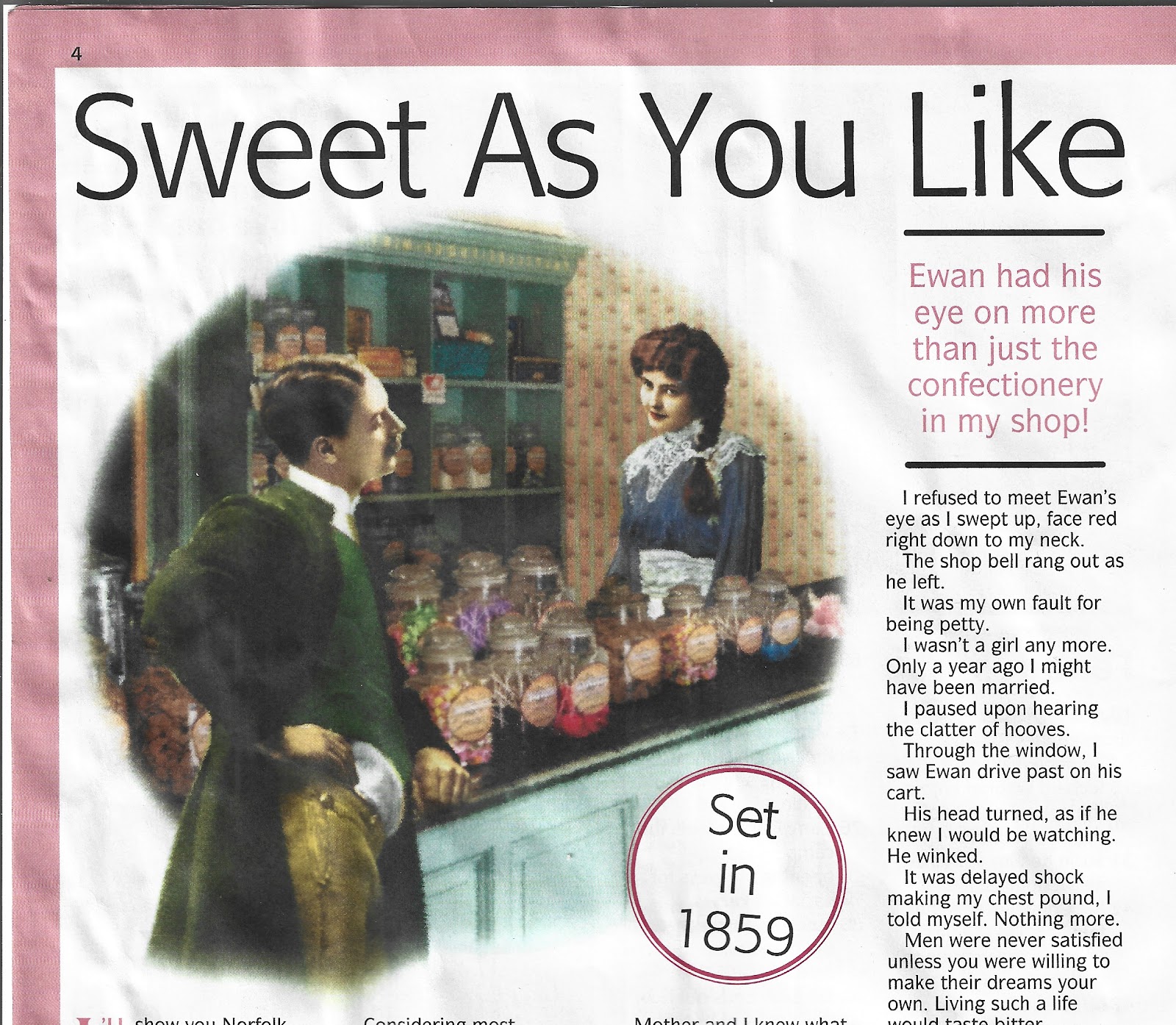
Once A Rogue is another one of my Regency stories, released in The People’s Friend Special No. 201 this month. It was written alongside Trading Places only this time a young woman must stop her step-sister from destroying her good name…
Whenever an elopement takes place in a Regency story, it is often said they went to Gretna Green. It's mentioned several
times in Jane Austen’s novels. I never realised why this place was so popular
until now.
Back in 1754, England passed a Marriage Act that
couples could not marry outside a church or without parental permission if one
of them was under 21, most likely to stop scandal and fortune hunters. However,
Scotland did not have this stipulation and handfasting still took place.
An English couple wanting to defy disapproving family
members could elope to Scotland, perhaps even with the extra drama of a furious
father or love rival giving chase. Gretna Green was considered the best place
as it was closest to the Scottish/English border.
What I really liked was the idea of anvil priests.
Handfasting could be witnessed by anyone, not just a priest. Often these
breathless, desperate couples would go to the blacksmith who would, for drink
and coin, witness the marriage. He would strike his anvil when the deed was
done.
In 1940, handfasting was no longer viewed as a valid way of getting married. However, even with the need for anvil priests gone, Gretna Green is still a hugely popular destination for marriages with its romantic backstory and views.

At the end of Once A Rogue, while the church bells ring, the wedding garter is thrown. Just like the bride’s bouquet, catching the garter toss promised marriage, though for a lucky bachelor rather than a maid.
This bit of
folklore is believed to have originated from the Dark Ages, where wedding guests chased
the bride and groom to their bedroom, trying to pull the garter from the
bride’s leg. Not exactly something I would fancy! Nowadays, the bride will pull
the garter off herself and fling it into the crowd—how much leg she shows is up
to her.

My historical short story in this week's The People's Friend, Trading Places, is a slight deviation from my usual Victorian tales, though only by a few years. This one is set during the Regency era and has been inspired by the country dances that used to take place in the ballrooms. The idea came about when watching the 2020 version of Emma, starring Anya Taylor-Joy.
Fiona and Anna decide to switch places during harvest celebrations to see how different their lives are. While Fiona gets to grip with the rough tumble of a barn dance, with laughter, fiddle music and plenty of cider, Anna must make sure not to offend someone by breaking one of the many rules which constricted the Regency ballroom.
These high society parties helped form social connections and allowed unattached women to go on the hunt for a suitable match. Etiquette was highly important. Good manners are of course understandable: no leaving a dance halfway through and swords weren't allowed in the ballroom (imagine having to avoid getting whacked by that while dancing!) Though some strange rules also involved: No snapping your fingers to the music, as that was seen as too common, not even clapping. Ladies could not dance together, but it did happen whenever the men were called away to fight, yet dancing with a man multiple times marked a woman as too familiar and tainted her reputation. Invitations would soon dry up...
A caller announced each dance. No dance could be called twice (so those who only had a dance or two perfected would be in trouble). The aim was to be graceful while closely following the bars of the music. Couples formed rows and performed complicated, well-timed figures with other pairs, known as long dances. Depending on how many pairs, these dances could take over half an hour!
Keeping up with the tempo of the music was the main objective. As there were multiple dancers, going too fast or slow could rudely wrongfoot others and lead to people dawdling about until it was their turn. Becoming too engrossed with your partner might end up ruining a carefully crafted dance.
One of the more popular dances was the Quadrille, which followed a square formation. The dance I'm partial to is the one called Kitty's Cottage.
More about these dances can be found at: https://www.regencydances.org/


My short story, Lights On The Marsh, is appearing in this week’s issue of The People’s Friend magazine. In the story, Laura is warned never to whistle while walking across marshland in case it summons a ghost – the Lantern Man. This blogpost will examine the folk legend, the lives of marshmen and wherrymen as well as the story’s location, St Benet’s Abbey in Norfolk.
The People’s Friend can be found in most newsagents or
you can subscribe at:
 |
| Illustration by Sailesh Thakrar |
At night, when the mists are thick and the moon cloaked, strange lights can be seen floating over the marshes. Most called these orbs will o’ the wisps, hinkypunks or corpse candles. Another name for this curiosity was the Lantern Man. This ghost wandered along with his light, luring travellers not towards the path home but to a watery grave. His most popular haunt was around Wicken Fen.
During the 1800s, more and more stories about
travellers encountering this malignant spirit were told. Not all of them ended
in escape. One such story is the tale of Joseph Bexfield, whose grave can be
found at Thurlton. He was a wherryman whose drowning in 1809 was blamed on the
Lantern Man.
Having your own light did not dissuade this ghost,
instead drawing him nearer, but what always caught his attention was the sound
of someone whistling. As well as drowning his victims, he could steal a man’s
breath if he walked past.
Most advice was to drop your light and run. If the Lantern Man still chased, then throwing yourself down and holding your breath might work. Holding your breath appears multiple times in ghost lore across the world, such as while walking through a graveyard in case you breathed in a spirit (which is something I myself believed in when I was younger!) or to avoid being detected by the hopping vampire jiangshi in China.
In popular media, folklore inspired video games have
featured the mechanic of holding your breath in the presence of supernatural
entities, for example in Red Candle Games’ Detention (set in Taiwan and also featuring a Lantern Man type spirit) and Wales Interactive’s newly
released Maid of Sker.
Some called the Lantern Man Jack O’ Lantern, though
this apparently infuriated him. When the marshes were aglow with many lights,
it was said multiple Lantern Men were roaming.

Who were these men and women who believed in the ghost
stories, though? In Lights On The Marsh, Laura’s father is a marshman who
vanished when she was a child. This was blamed on the Lantern Man, although
gossips in the village believed differently…
Marshmen were slightly better off than other labourers
living along the Broads, but they certainly had to work hard for their wage. No
matter the weather, which was often cold, damp and muddy, their tasks involved
tending to cattle, clearing obstructions from dykes, cutting reeds to supply
thatch for cottage roofs, and checking on drainage mills. Often their
designated area stretched for miles of isolated marshland. An example of how
marshmen lived can be found at Toad Cottage, How Hill.
Wherrymen were another iconic image of the Broads. They
would carry ice and wood along the rivers in their wherries, which were slim,
clinker-built vessels with a tar slickened sail and a Jenny Morgan weathervane
spinning on top. One of the last remaining wherries is the Albion.
Smugglers often enlisted these men to help them transport
their contraband further inland. Being caught by customs could be fatal for a
wherryman’s livelihood, the price being the destruction of their ship. One method
of avoiding being caught with the goods was by weighting barrels down in rivers
and using a small feather lure to mark the anchor point. This was known as ‘sowing
the crops’.
During the height of smuggling, local legends and
ghost stories became popular down the pub. In a smoky room before the calming
flicker-warmth of the fire, where night and the will o’ the wisps seemed
distant, villagers told stories of Lantern Men and Old Shuck.
It frightened sensible folk into hurrying to bed when
the moon winked and the roke clung like cotton to the trees. Any peculiar
lights or noises could be blamed on spirits, rather than a clumsy smuggler
dropping his lantern and setting his trousers on fire.

St Benet’s Abbey was originally a Benedictine
monastery founded around 1020AD. It is on a small island, which was once
called Cowholm, on the marshland near the River Bure. Artistic reconstructions suggest a thriving community with swathes of land to tend to
following the patronage of King Cnut. Now it is a mere ruin, with only a few
stone walls and indentations in the land to suggest what might have once been
there.
It survived Henry VIII’s dissolution of the
monasteries, but as people turned towards Protestantism the abbey fell to ruins
from neglect, its stones stolen away to form other buildings. However, the area
remains consecrated ground and the Bishop of Norwich holds a service there every
year.
Although it doesn’t feature in Lights On The Marsh, there
is another ghost who is known to wander the abbey grounds.
A monk was bribed by William the Conqueror to sneak
him inside so he could kill the other monks and take control of the monastery. The
monk’s reward for this treachery was the Normans turning around and stringing
him up over St Benet’s gate. Each year in May, his screams can be heard. A
second ghost, or possibly even the same one, is a monk riding in a boat with
his dog.
The most recognisable landmark at the abbey is the
mill, which is housed in the ruins of the gatehouse. St Benet’s mill was built
in the 1700s and it is one of the oldest in Norfolk. It was converted into a
drainage mill in the 1800s. The cap and sails were blown off by a storm in
1863.
Several artists, from John Sell Cotman to Thomas Lound,
have sketched and painted the mill. My biggest inspiration for Lights On The
Marsh’s setting was Henry Bright’s landscape painting of the drainage mill
during a storm in 1847. It must have been a striking sight while sailing past
in a wherry, perhaps even foreboding if it was late at night and the skipper
thought he had seen something writhing by the gate.

Of course, nowadays any floating orbs are blamed on
the random but natural ignition of marsh gasses rather than the Lantern Man.
But I much prefer the thought of spirits slithering through the green flecked
waters of the Broads. It paints an evocative picture of a person walking along
the Broads at night, alone with only their light. They don’t want to believe in
the stories, yet still shiver at something shifting amongst the reeds.
Whistling might steady their nerves, until they see the Lantern Man’s light
bobbing towards them...


